Stories
Scientists Solve 45-Million-Year-Old Crocodile Fossil Mystery Linked to Great Sphinx
M
Moneycontrol•07-10-2026, 13:10
Scientists Solve 45-Million-Year-Old Crocodile Fossil Mystery Linked to Great Sphinx
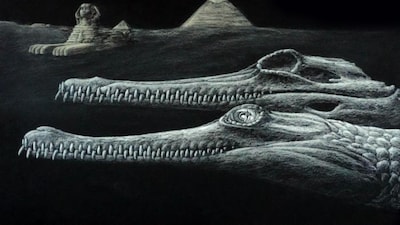
- •A 45-million-year-old fossil discovered in Egypt has been identified as a brand new crocodilian species named Herugavialis cairensis.
- •The ancient creature shares a surprising coincidence with the Great Sphinx as both are missing the tip of their nose.
- •The fossils were originally recovered from Egypt's Mokattam Formation in the 1920s, which is the same limestone source used to build the Great Sphinx.
- •Modern CT scanning and 3D X-ray analysis revealed that the skull belonged to a distinct genus rather than Tomistoma as previously thought.
- •The discovery highlights that ancient Mediterranean shallow seas supported a diverse crocodilian ecosystem before they vanished around 6 million years ago.
Key Questions Answered
Scientists named the newly discovered extinct crocodilian species Herugavialis cairensis, which belongs to the gavial family and lived during the Middle Eocene.
Both the newly discovered fossil skull and the Great Sphinx are missing the tip of their nose, an unusual coincidence that inspired part of the animal's name.
The fossils were recovered during the 1920s from Egypt's Mokattam Formation, a rock formation that is around 45 million years old.