Stories
Genghis Khan's Hidden Tomb: 800-Year Mystery Endures
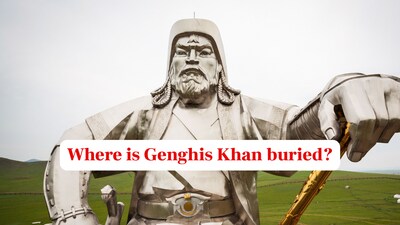
- •Genghis Khan, the founder of the Mongol Empire, has no confirmed burial site nearly 800 years after his death in 1227.
- •Historical accounts and legends suggest extraordinary measures were taken to keep his tomb secret, including killing those involved in the burial and diverting a river.
- •The most widely discussed theory places his grave near Burkhan Khaldun, a sacred mountain in Mongolia's Khentii region, which became a restricted area known as Ikh Khorig.
- •Archaeological searches are challenged by the remote, rugged terrain, the possibility of an intentionally modest burial, and the lack of definitive evidence.
- •A 2014 satellite imagery and crowdsourcing project identified numerous archaeological sites but failed to locate Genghis Khan's tomb, leaving its whereabouts an enduring mystery.
Key Questions Answered
The leading theory places his grave around Burkhan Khaldun, a sacred mountain in northeastern Mongolia's Khentii region. However, there is no definitive archaeological proof, and other theories suggest locations across Mongolia, China, Kazakhstan, and Russia.
The remote and rugged terrain of northeastern Mongolia, combined with extreme weather and changing landscapes, makes searches extremely difficult. Additionally, legends suggest deliberate measures were taken to conceal the burial site, leaving no monumental structure for researchers to easily identify.
In a 2014 research project, over 10,000 online volunteers used crowdsourced satellite imagery to examine thousands of landscape photos of Mongolia for unusual features. While the project identified numerous unknown archaeological sites, Genghis Khan's actual tomb remains undiscovered.