Stories
75,000-Year-Old Neanderthal Bone Reveals Oldest Evidence of Human-on-Human Violence
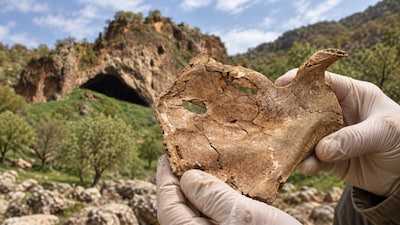
- •Archaeologists discovered a 75,000-year-old Neanderthal shoulder bone in Iraq's Shanidar Cave bearing the oldest evidence of a fatal attack using a wooden spear.
- •Microscope and micro-CT scans revealed a 15-millimeter hole with no healing signs, indicating the injury caused immediate death by piercing the chest and lungs.
- •The skeleton, named Shanidar Z or Shanidar A, was part of a group of at least five Neanderthals carefully buried behind a large rock.
- •Led by Cambridge University experts and published in 'Scientific Reports', the study highlights both the violent conflicts and the compassionate burial traditions of Neanderthals.
Key Questions Answered
Archaeologists discovered a 15-millimeter wide circular hole in a 75,000-year-old Neanderthal shoulder bone, known as Shanidar A, excavated from the Shanidar Cave in Iraqi Kurdistan. Microscopic and micro-CT scan analysis revealed that this fatal injury occurred while the individual was alive or at the time of death, caused by a wooden spear that pierced the chest and lungs, representing the oldest evidence of a fatal human-on-human attack.
Scientists carefully analyzed the size and pattern of the 15-millimeter hole in the shoulder bone, ruling out damage from plant roots, insect burrows, or excavation accidents. The round shape and dimensions of the hole matched the profile of ancient wooden spears found in Britain and Germany, while marks from stone-tipped spears appeared completely different.
The discovery of Shanidar A and four other Neanderthal skeletons buried together behind a giant two-meter-high rock demonstrates that Neanderthals methodically and respectfully buried their dead companions. This finding highlights two contrasting aspects of Neanderthal society: mutual care for the injured alongside deadly internal conflicts and violence.