Stories
Antarctica's Lost Mountains: Did Ancient Giants Fuel Earth's Complex Life?
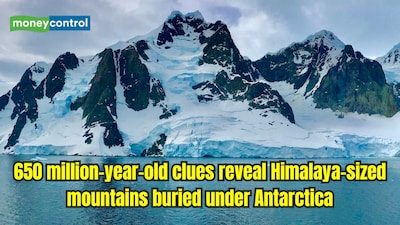
- •Scientists discovered geological evidence of ancient mountains, possibly rivaling the Himalayas, hidden beneath Antarctica's ice.
- •Analysis of zircon crystals revealed a strong Antarctic signature from 650 to 450 million years ago, a period crucial for Gondwana's formation.
- •These colossal mountains, formed by continental collisions, may have released vital nutrients like phosphorus and iron into oceans through erosion.
- •The influx of nutrients could have boosted marine life and oxygen production, creating conditions favorable for the rise of complex life.
- •The study suggests mountain building and erosion played a significant, previously underestimated role in setting the stage for the diversification of complex animals.
Key Questions Answered
Researchers analyzed 1,712 zircon grains and compared them with thousands of previously studied Antarctic zircons to trace the geological fingerprints of the vanished ranges. These microscopic minerals act as geological time capsules, revealing ancient rock formation and geological events through their age and chemical composition.
The geological signatures point to deep roots of exceptionally high mountain ranges that could have reached heights comparable to the modern Himalayas. These ancient ranges were linked to landmass collisions during the formation of the supercontinent Gondwana.
As the giant mountains weathered, they likely released nutrients like phosphorus and iron into the oceans, which stimulated algae and cyanobacteria to increase biological activity and oxygen production. Additionally, mountain erosion may have helped bury organic carbon and sediments, potentially allowing atmospheric oxygen levels to rise during a crucial period before complex animals diversified.