Stories
Why Scientists Are Worried As New Study Reveals The Moon Is Shrinking With 10000 Faults
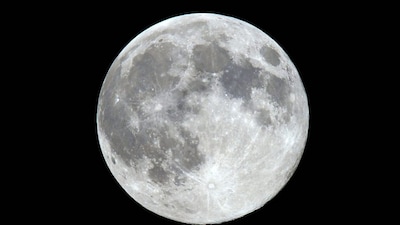
- •A recent study published in The Planetary Science Journal reveals that the Moon is shrinking and features over 10,000 young tectonic faults across its surface.
- •The Moon's radius has contracted by approximately 45 metres over the past 400 to 800 million years as its interior gradually loses heat and cools.
- •The cooling interior causes the brittle outer crust to break and form thrust faults, which can trigger moonquakes and pose seismic risks to future lunar missions.
- •Unlike Earth, the Moon has a single dominant outer shell instead of moving tectonic plates, meaning moonquakes are not restricted to plate boundaries.
- •NASA's Artemis programme and planned lunar south pole landing sites are located near these active fault regions, raising safety concerns for astronauts and infrastructure.
Key Questions Answered
The Moon is shrinking because its interior is gradually losing heat and cooling, causing it to contract and occupy less space. This cooling process puts the Moon's brittle outer crust under compression, which leads to breaking and the formation of thrust faults.
Researchers found that the Moon's radius has contracted by approximately 45 metres, which is about 148 feet, over the past 400 to 800 million years.
Moonquakes and tectonic faults can pose a risk to astronauts, lunar landers, scientific instruments, and infrastructure by affecting structural stability or damaging equipment. This is particularly concerning because thrust faults are located in and around the lunar south pole, which is a priority region for future human exploration and the Artemis programme.