Stories
NASA Rover Uncovers Mars' Complex Watery Past, Not Just a Single Wet Period
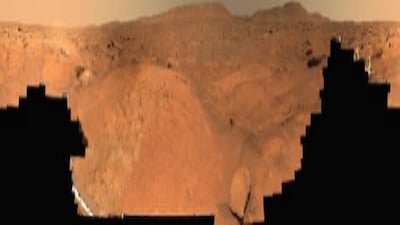
- •NASA's Perseverance rover data reveals Mars had a much more complex watery history than previously thought, with evidence of groundwater, lake water, and hydrothermal activity.
- •A Purdue University-led study of rocks in Jezero Crater's Margin Unit shows chemical and mineral clues indicating multiple types of water interacted with the Martian surface over time.
- •The findings, published in Communications Earth & Environment, suggest Mars evolved through various water environments, not just a single wet period followed by desiccation.
- •Perseverance's SuperCam instrument detected signatures in the rocks pointing to several stages of water activity, highlighting a dynamic Martian past.
- •This research adds to the geological history of Mars, suggesting its surface conditions were not fixed and helping scientists understand the disappearance of its ancient water.
Key Questions Answered
Data collected by NASA's Perseverance rover in the Margin Unit of Jezero Crater reveals that Mars had a far more complicated history of water than previously thought. Researchers found evidence that water repeatedly changed the Martian landscape through groundwater, lake water, and hydrothermal activity over multiple stages.
The Perseverance rover's SuperCam instrument collected observations of the Margin Unit between October 5 and 16, 2023. These observations were used by researchers to investigate the geological history and water activity at the edge of Jezero Crater.
No, the discovery does not mean scientists have found evidence of life on Mars. Instead, it provides valuable geological clues about chemical reactions between water and rocks that could have created environments capable of supporting microbial life, adding another piece to the planet's history.