Stories
Decoding Food Labels: The Real Purpose Behind Common Ingredients Explained
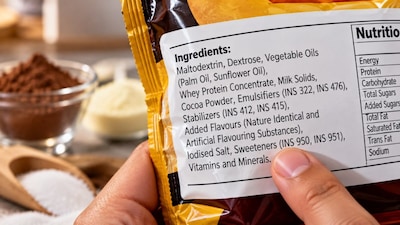
- •Consumers are increasingly reading ingredient labels, but recognizing a name is not the same as understanding its functional purpose in food formulation.
- •Ingredients like maltodextrin and modified starches provide structure, bulk, and texture rather than direct nutritional benefits.
- •Natural sweeteners like jaggery and coconut sugar share a similar sugar-based nutritional profile to refined sugar and impact the body based on quantity.
- •Dairy ingredients such as whey powder and skimmed milk powder have different protein and lactose levels, making the final product formulation crucial.
- •Additives like xanthan gum are used in small amounts for stability and texture, dispelling the myth that unfamiliar names are harmful fillers.
Key Questions Answered
Ingredients like maltodextrin, glucose syrups, dextrose, and modified starch serve a largely technical role rather than a nutritional one. According to industry experts, they form the functional base of formulations to help with bulk, texture, stability, and product consistency.
Consumers often assume traditional sweeteners are healthier, but their core function remains sweetness and energy supply. Although less refined options may contain trace minerals or flavor compounds, they are still primarily sugar-based sources whose impact depends on quantity and overall diet.
Unfamiliar naming often causes consumer concern, but xanthan gum is actually a fermentation-derived stabilizer used in very small amounts to improve texture and consistency. It functions as an essential additive to help maintain product stability rather than acting as a harmful filler.