Stories
Yogurt vs. Curd: Unraveling the Key Differences in Your Dairy
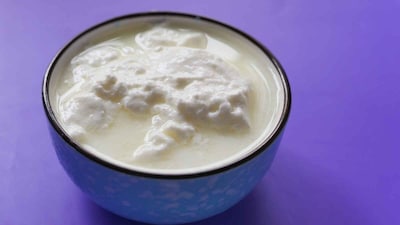
- •While often used interchangeably, yogurt and curd differ in their production methods, bacterial cultures, and consistency.
- •Curd is traditionally made by fermenting warm milk with a small amount of existing curd, relying on naturally occurring lactic acid bacteria.
- •Yogurt is produced under controlled conditions using specific bacterial starter cultures, such as Lactobacillus delbrueckii subsp. bulgaricus and Streptococcus thermophilus.
- •Homemade curd's consistency and taste can vary due to factors like temperature and fermentation time, whereas commercial yogurt offers more consistent results.
- •Both offer nutritional benefits, but their profiles vary; checking labels for added sugar in yogurt and controlling ingredients in homemade curd are recommended.
Key Questions Answered
Curd is traditionally made by adding a small amount of existing curd to warm milk, allowing naturally occurring lactic acid bacteria to multiply and ferment the milk. Yogurt, however, is generally produced commercially under controlled conditions using specific, defined starter cultures like Lactobacillus delbrueckii subsp. bulgaricus and Streptococcus thermophilus at a maintained temperature.
Homemade curd is affected by variables such as ambient temperature, fermentation time, the specific type of milk, and the starter used, making it mild one day and sour the next. In contrast, yogurt production is strictly controlled under commercial conditions, resulting in a much more consistent taste and texture.
Both options provide protein, calcium, and nutrients, though profiles vary across full-fat, low-fat, or sweetened types. In India, curd is commonly used as the English translation for "dahi," causing menus and daily conversations to use both terms interchangeably despite technical differences.