Stories
Scientists Unravel 70 Million-Year Mystery: Dinosaurs Vanished Due to Dust, Not Acid Rain
N
News18•21-09-2026, 15:14
Scientists Unravel 70 Million-Year Mystery: Dinosaurs Vanished Due to Dust, Not Acid Rain
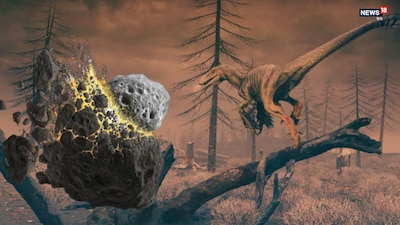
- •Scientists have solved the 66-million-year-old mystery of how dinosaurs vanished from Earth.
- •A giant asteroid collision wiped out 75% of species, including dinosaurs, from the planet.
- •The asteroid was approximately 10-15 kilometers wide, the size of a small city, and impacted at 64,000 km/h.
- •The impact created a dense cloud of dust and debris, blocking sunlight for months, collapsing the food chain, and causing mass extinction.
- •New research indicates it was a rare carbonaceous chondrite, and fine dust, not acid rain, was the primary cause of the dinosaurs' demise.
Key Questions Answered
Recent research reveals that the asteroid which collided with Earth 6.6 million years ago belonged to a very rare type of carbonaceous chondrite, specifically the CO chondrite or Ornans class from the outer solar system or Jupiter's asteroid belt.
Scientists estimate that the asteroid was approximately 10 to 15 kilometers wide—about the size of a small city—and traveled at a staggering speed of around 64,000 kilometers per hour when it hit Mexico's Yucatan Peninsula.
While many previously believed sulfur caused destructive acid rain, new findings show that the true culprit was the dense cloud of dust and fine debris that blocked sunlight for months, plunging the Earth into prolonged winter-like conditions that collapsed the food chain.