Stories
Francis Halzen Wins 2026 Nobel Prize In Physics For Antarctic Neutrino Discovery

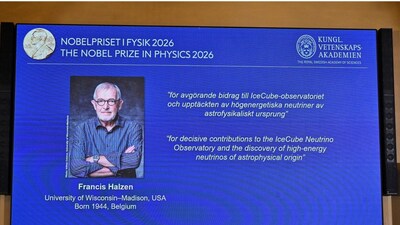
- •American physicist Francis Halzen won the 2026 Nobel Prize in Physics for his contributions to the IceCube Neutrino Observatory and the discovery of high-energy astrophysical neutrinos.
- •Halzen was honored for utilizing an enormous block of Antarctic ice to detect elusive neutrinos, opening a new method for studying the universe.
- •Neutrinos are tiny, electrically neutral ghost particles that travel vast distances without being deflected, carrying information about violent cosmic events.
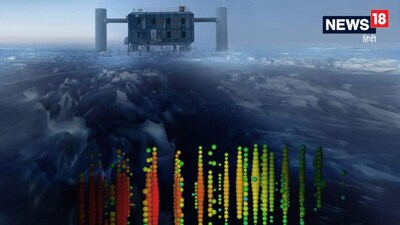
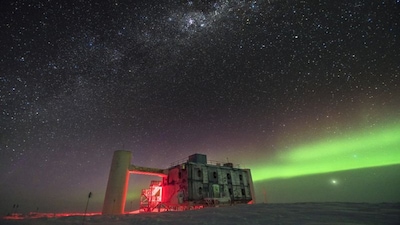
- •Halzen first proposed using South Pole ice in 1988, leading to the creation of the IceCube Neutrino Observatory, which was completed in 2011 with thousands of buried light sensors.
Key Questions Answered
American physicist Francis Halzen won the 2026 Nobel Prize in Physics for his decisive contributions to the IceCube Neutrino Observatory and the discovery of high-energy neutrinos originating from deep space.
The IceCube Neutrino Observatory is a detector occupying a cubic kilometre of Antarctic ice equipped with thousands of light sensors. When a neutrino crashes into an atomic nucleus, it produces a tiny flash of light that these buried sensors detect to gather information about the particle.
Neutrinos are tiny, electrically neutral particles that can travel enormous distances from violent cosmic events without being deflected or losing energy. Because they pass through space largely undisturbed, they act as messengers carrying information from distant parts of the universe that other particles cannot.