Stories
Why Soap Foam Is Always White Despite Colorful Soaps
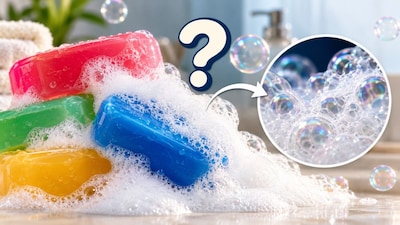
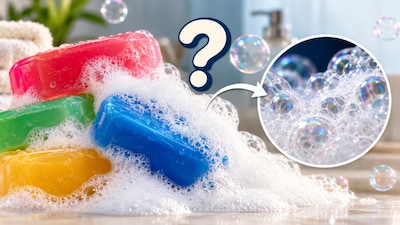
- •Even though soaps come in red, blue, or yellow, their foam is always white due to a fascinating scientific explanation based on physics and optics
- •When soap is mixed with water, it creates countless tiny bubbles that consist of a thin layer of soapy water enclosing a pocket of air
- •Sunlight hitting these numerous curved bubble surfaces scatters in all directions, and the combined effect makes the foam appear white to the human eye
- •The concentration of color pigments in the soap is generally low in the thin layer, making the hue less noticeable against intense light scattering
- •A similar optical principle explains why clouds and ice appear white due to the scattering of visible light by tiny droplets or ice crystals
Key Questions Answered
The foam appears white primarily due to the scattering of light by countless tiny soap bubbles. When white light strikes the curved surfaces of these bubbles, it scatters in all directions, and the combined effect of these mixed light spectrums makes the foam look white to the human eye.
Although pigments give soap its distinctive color, their concentration is generally low in the thin film of soapy water that forms the bubbles. As the soap spreads into numerous tiny bubbles, the color becomes diluted and much less noticeable, especially against the intense scattering of white light.
The numerous air-water and soap-water interfaces within the foam cause repeated light scattering, making the substance appear opaque and white rather than transparent. Smaller bubbles result in more intense light scattering, making the foam appear brighter and whiter.