Stories
Why Women Cover Their Faces Before Ravana Statue in Mandsaur Dussehra
N
News18•20-10-2026, 07:30
Why Women Cover Their Faces Before Ravana Statue in Mandsaur Dussehra
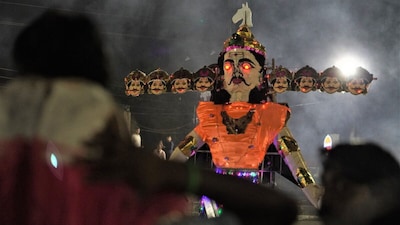
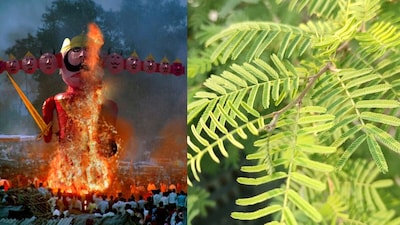
- •While most of India burns effigies of Ravana on Dussehra to celebrate good over evil, the town of Mandsaur in Madhya Pradesh worships him as a revered son-in-law.
- •The local Namdev community believes that Ravana's wife, Mandodari, belonged to their clan, making Ravana their son-in-law.
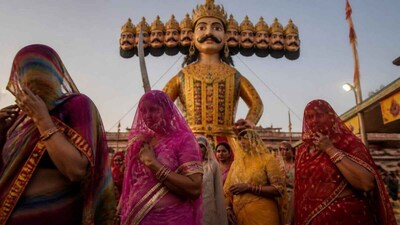
- •Women from the Namdev community traditionally cover their faces with a veil or ghunghat out of respect when passing in front of Ravana's statue.
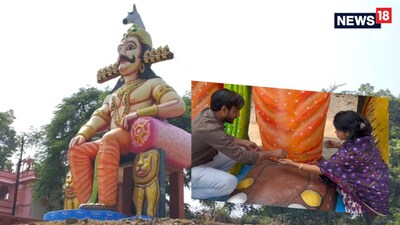
- •A 25-foot-tall cement statue of Ravana in the Khanpura area features nine human heads and a donkey head symbolizing his loss of wisdom upon abducting Sita.
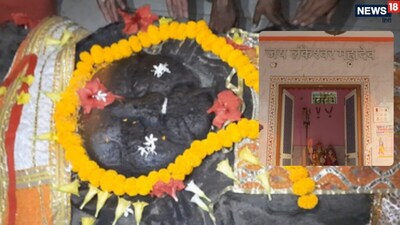
- •Devotees gather to offer prayers and tie sacred threads around the statue's left foot to seek relief from fevers before his effigy is symbolically slain in the evening.
Key Questions Answered
Women from the Namdev community in Mandsaur traditionally cover their faces with a ghunghat out of respect, because they regard Ravana as their community's revered son-in-law.
According to local tradition, Ravana's wife Mandodari belonged to the Namdev community. Because the community considers Mandodari its daughter, Ravana is traditionally regarded as the community's son-in-law.
The 25-foot-tall cement statue features nine human heads with a donkey’s head positioned above them. The donkey's head symbolizes the loss of wisdom Ravana suffered when he abducted Sita.