Stories
Why Mandsaur Worships Ravana as Son-in-Law on Dussehra Before Slaying Him
N
News18•18-10-2026, 20:28
Why Mandsaur Worships Ravana as Son-in-Law on Dussehra Before Slaying Him
- •In Mandsaur, Madhya Pradesh, Ravana is worshipped with full rituals on Dussehra because the Namdev community considers Mandodari as their daughter.
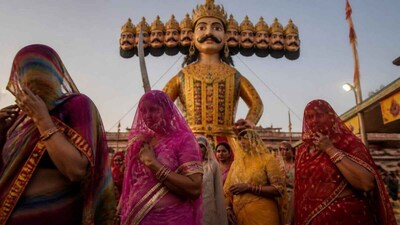
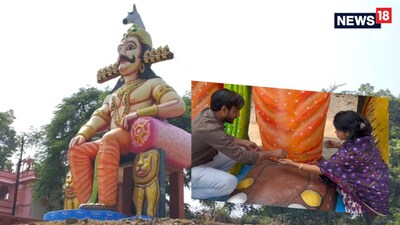
- •A 25-foot cement statue of Ravana stands in the Khanpura area, where women observe a veil in front of it out of respect as a son-in-law.
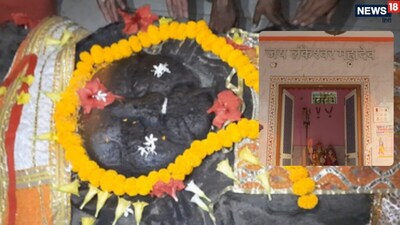
- •Devotees believe that tying a sacred thread on the statue's left foot cures fever and fulfills their prayers.
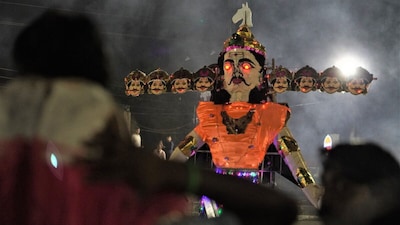
- •The statue features nine human heads and a tenth head shaped like a donkey, symbolizing the foolish intellect Ravana displayed when he abducted Sita.
- •After a full day of worship, the statue is symbolically slain in the evening as punishment for abducting Sita.
Key Questions Answered
In Mandsaur, the Namdev community considers Ravana's wife Mandodari as their daughter, making Ravana their son-in-law and revered deity. Because of this unique familial relation, women in the community pull down their veils as a mark of respect when passing by his statue.
While Ravana is recognized as an extremely learned scholar, his intellect became like that of a donkey at the time he committed the grave mistake of abducting Sita. To visually depict this poor decision, a donkey's head is placed above the main head on the statue.
Devotees maintain a deep faith in the Ravana statue and believe that tying a sacred lachha thread on its left foot provides relief and helps cure fevers.