Stories
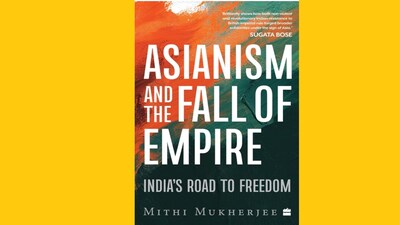
Asianism and the Fall of Empire: India's Road to Freedom - Book Extract
M
Moneycontrol•23-09-2026, 19:29
Asianism and the Fall of Empire: India's Road to Freedom - Book Extract
- •Mithi Mukherjee's book, "Asianism and the Fall of Empire: India's Road to Freedom," explores the role of Asianism in India's independence movement.
- •The book contrasts Rudyard Kipling's "White Man's Burden" with Rabindranath Tagore's vision of an "Asian burden" to save humanity, highlighting a shift in civilizational discourse.
- •Asianism in India evolved in two stages: a civilizational stage emphasizing Asian unity against Western imperialism, and a geopolitical stage seeking political sovereignty through transnational anti-imperial alliances.
- •Mukherjee argues that Indians discovered their will to civilizational and national-political sovereignty through their engagement with Asia, rather than solely within India's territorial boundaries.
- •The book offers a new global perspective on India's freedom struggle, asserting that Asianism was foundational to both cultural and political Indian national identity and anticolonialism.
Key Questions Answered
The book explores how the discourse of Asianism and civilizational sovereignty served as the foundational driving force behind India's anticolonial freedom movement and resistance against the British Empire.
In 1924, Rabindranath Tagore reversed Kipling's concept for his audience in Calcutta, condemning Western civilization's cult of power and arguing that Asia must find its voice to save humanity.
It was provoked by the British imperial discourse that dismissed Indian civilization, alongside India's rapidly increasing maritime contact with Southeast and East Asian countries during the eighteenth and nineteenth centuries.