Stories
Mumbai-Ahmedabad Bullet Train Gets High-Speed Movable Crossings for 320 Kmph Operations

- •The Mumbai-Ahmedabad High-Speed Rail (MAHSR) project introduces movable crossings (swing-nose crossings) for the first time on the Indian railway network.
- •This technology supports safe and reliable train operations at speeds up to 320 kmph, departing from conventional fixed-crossing turnouts.
- •Movable crossings eliminate gaps at the crossing nose, creating a continuous running surface to reduce dynamic impact, vibration, noise, and wear on rails and rolling stock.
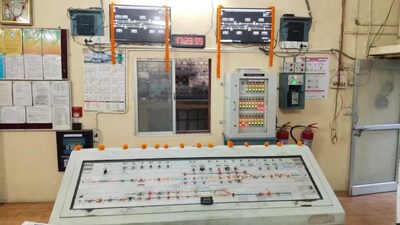
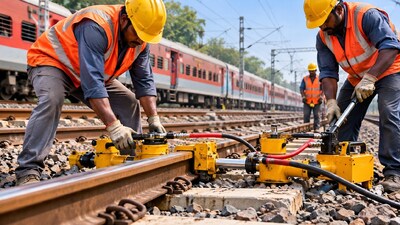
- •High-speed turnouts are equipped with two independent point machines for switch rails and movable crossings, operating under a coordinated control system.
- •The system incorporates multiple detection and verification layers to ensure precise positioning and locking, enhancing safety, ride quality, and operational reliability.
Key Questions Answered
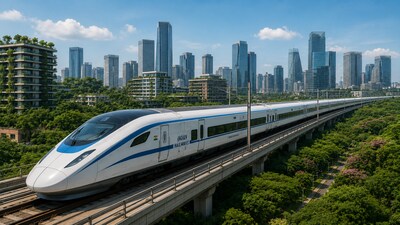
The Mumbai-Ahmedabad High-Speed Rail project is introducing turnouts equipped with movable crossings, or swing-nose crossings, for the first time on the Indian railway network. This technology supports safe operations at speeds of up to 320 kmph by eliminating the gap found at conventional fixed crossings.
By shifting the crossing nose in coordination with switch rails, movable crossings create a continuous running surface that maintains uninterrupted wheel guidance. This technology eliminates the gap that causes dynamic forces at high speeds, thereby reducing vibration, structure-borne noise, and wear on rails and rolling stock.
The high-speed turnouts use two independent point machines operating under a coordinated control system. One machine operates and locks the switch rails, while the other operates and locks the movable crossing nose, ensuring a continuous rail path is mechanically secured at both critical locations.