Stories
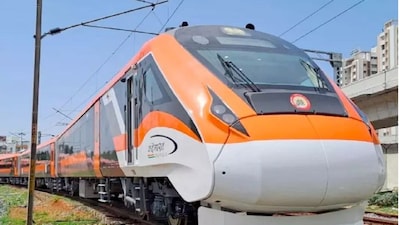
Bullet Train to Change Tracks at 320 Kmph Without Slowing Down: How Canted Turnouts Work
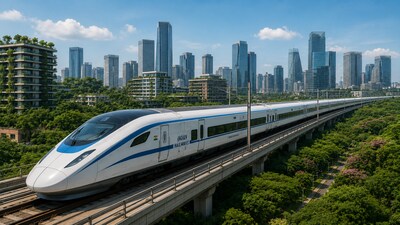
- •India's first bullet train, the Mumbai-Ahmedabad High-Speed Rail Corridor, will use advanced canted turnout technology to switch tracks at speeds up to 320 kmph.
- •Canted turnouts maintain the banking of the railway track even during track changes, countering centrifugal forces and ensuring a smooth, comfortable ride for passengers.
- •Traditional railway lines require trains to slow down at turnouts due to sudden force changes and discomfort caused by lack of banking on curved sections.
- •Point machines and movable track components within turnouts guide trains safely from one track to another, with high-speed rail requiring stricter engineering standards.
- •This technology reduces vibrations, forces on trains, and wear on wheels and rails, enhancing safety and passenger comfort for India's inaugural high-speed rail project.
Key Questions Answered
India's first bullet train utilizes a specially designed system called a canted turnout along with point machines and movable track components to change tracks smoothly at speeds up to 320 kmph without requiring the train to slow down or experience sudden balance shifts.
A canted turnout is a track-switching system that maintains the banking of the railway track even where trains transition from one path to another. By continuing this banking through the switch, it counters centrifugal forces, reduces vibrations, and minimizes wear on wheels and rails.
Movable-crossing turnouts, also known as swing-nose crossings, eliminate the gap present at conventional fixed crossings by shifting the crossing nose in coordination with switch rails. This creates a continuous running surface, significantly reducing dynamic impact, vibration, and interior noise at speeds exceeding 250-300 kmph.