Stories
Mecca Pact: Beyond Houthi War? Expert Says Pakistan-Saudi-Turkey Alliance Has Broader Scope
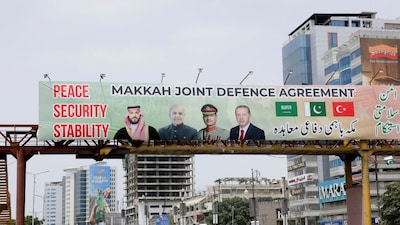
- •Abhinav Pandya cautions against dismissing the Mecca Agreement, stating the Pakistan-Saudi Arabia-Turkey alliance is too young and broad to be written off, despite lack of unified military command.
- •Pandya notes that like NATO, the Mecca pact members need time to establish command structures, develop interoperability, and ratify the agreement before becoming fully operational.
- •Pakistan's historical military support for Saudi Arabia, including establishing the Royal Saudi Air Force and deploying troops, highlights its deep involvement beyond current Houthi conflict reluctance.
- •Pakistan's hesitation in the Saudi-Houthi conflict stems from its "Shia problem," complex relationship with Iran, and fears of internal unrest or bringing the war home.
- •The Mecca pact's true purpose extends beyond mutual defense, serving as a channel for Saudi Arabia to access Chinese military technology via Pakistan and Turkish drone technology, and leveraging Pakistan's mediation role with Iran.
Key Questions Answered
Pakistan's reluctance stems from political and diplomatic considerations, including its complicated relationship with Iran and a large domestic Shia population, which fears that direct military involvement against Iran or its allies could trigger internal unrest and bring the conflict to its own shores.
The Mecca pact was conceived as a long-term project to create a new regional security architecture, extending well beyond mutual defence. It serves to provide Saudi Arabia with channels to Chinese military technology and Turkish drones, while leveraging Pakistan's ties with China to encourage a diplomatic resolution with Iran.
Experts note that the alliance is too young and broad in scope to be dismissed, as the member states lack a unified military command and interoperability, and have yet to fully ratify the agreement or make it operational.