Stories
Google Launches AI Chips into Space to Test Future Orbital Data Centers

- •Google has sent a satellite carrying its AI processors, known as MVP, into low Earth orbit to test the feasibility of space-based computing.
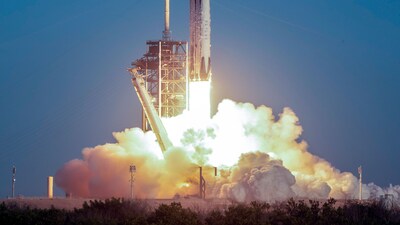
- •The MVP spacecraft, part of Google's Project Suncatcher, launched aboard a SpaceX Falcon 9 and contains four Google Tensor Processing Units (TPUs).
- •The mission aims to determine if Google's computing hardware can function reliably in space, handling simple AI requests using Gemini technology for about a year.
- •Space-based computing offers significant energy advantages, with solar panels in low Earth orbit potentially generating up to eight times more energy than ground installations.
- •Engineers addressed challenges like radiation and heat, designing a thermal system to cool the processors, which can currently run for about 15 minutes before needing to cool down.
Key Questions Answered
Project Suncatcher is a long-term research initiative exploring whether artificial intelligence computing infrastructure can be successfully established in space. The initial mission tests whether Google's tensor processing units can operate reliably in low Earth orbit despite harsh conditions like radiation and thermal challenges.
Google states that solar panels in low Earth orbit can potentially receive enough sunlight to produce up to eight times the energy generated by comparable ground-based installations. This helps address the massive electricity demands and resource strains associated with terrestrial AI data centres.
Because conventional air and fan cooling systems fail in the vacuum of space, Google designed a specialised thermal system. This system transfers heat away from the chips using layers of conductive material before releasing it through a space-facing radiator.