Stories
Nuclear Reactors on the Moon: The 2026 Space Race for Lunar Power
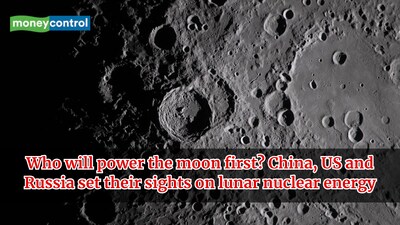
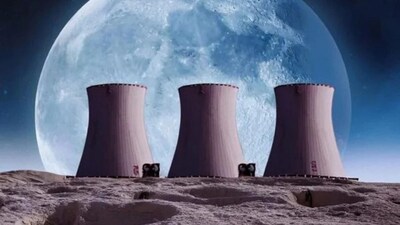
- •Major space powers including the US, China, and Russia are racing to develop nuclear power infrastructure to support sustained lunar exploration.
- •Because a lunar night lasts about two weeks, solar panels alone are insufficient, making nuclear fission reactors crucial for continuous electricity.
- •NASA and the US Department of Energy have partnered to target a lunar surface reactor by 2030, with a demonstration mission planned for 2028.
- •China and Russia are collaborating on the International Lunar Research Station, aiming to deploy a joint lunar power system around 2036.
- •Nuclear energy will power equipment in permanently shadowed craters at the Moon's south pole, where water ice and scientific resources are located.
Key Questions Answered
NASA is targeting a lunar surface reactor by December 2030, following a renewed partnership with the US Department of Energy and plans for missions like Space Reactor-1 Freedom in 2028. Meanwhile, Russia's Roscosmos and China are pursuing a joint lunar power system with an expected operational timeline around 2036 to support their International Lunar Research Station.
A lunar day-night cycle lasts about 29.5 Earth days, with extended periods of darkness lasting roughly two weeks at many locations, which makes solar panels alone insufficient for continuous electricity. Nuclear fission reactors can operate independently of sunlight, providing stable, long-term power for heating, life-support systems, communications, and equipment near the lunar south pole.
The lunar south pole is a major target because permanently shadowed craters in the region may contain water ice, offering crucial scientific insights into the Solar System and resources for future missions. However, the scarcity of sunlight in these dark areas makes dependable nuclear energy vital for operating equipment and sustaining long-term exploration.