Stories
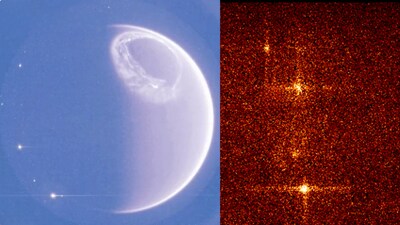
ESA Shares Stunning Image of the 'Black Sun' Captured by Trisat-S Satellite
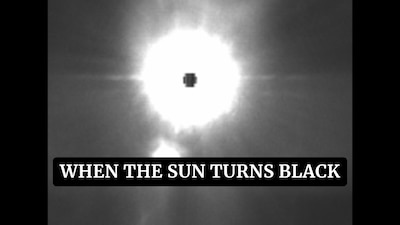
- •The European Space Agency released a striking image showing the Sun appearing black at its centre.
- •The dark spot is caused by the Black Sun effect, where heavily saturated camera pixels from intense light appear dark.
- •Researchers are deliberately studying this phenomenon to help spacecraft determine their position and orientation in space.
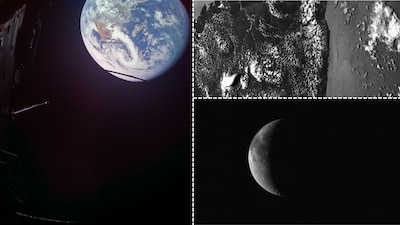
- •The Trisat-S nanosatellite is testing miniature cameras to support autonomous visual navigation for future long-duration missions.
Key Questions Answered
The Black Sun effect occurs when a camera sensor is overwhelmed by extremely bright light, heavily saturating the pixels and causing the brightest part of the image to appear dark instead of white. This imaging phenomenon is deliberately studied by researchers using the Trisat-S nanosatellite.
The dark spot created by the saturated Sun acts as a useful reference point that helps a spacecraft determine its position, attitude, and orientation in space. Researchers from the University of Maribor are investigating whether spacecraft can use this visual information to navigate autonomously.
The Trisat-S satellite was launched in September 2026 as one of six commercial and educational CubeSats aboard Isar Aerospace's Spectrum launcher. This mission marked the first time a European company reached orbit with its own launch vehicle.