Stories
Ukraine Faces Starlink Disruptions As Reliance On US Tech Exposed
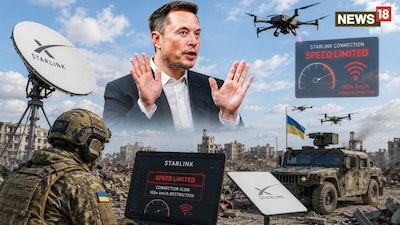
- •Ukraine experienced military and technological disruptions in drone operations after unexpected restrictions on SpaceX's Starshield satellite system.
- •Elon Musk stated that speed and usage limits on Starshield are controlled by the US military and the President of the United States.
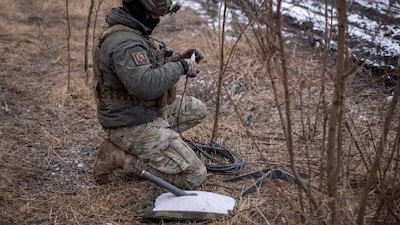
- •Europe currently lacks a ready-made alternative to Starlink, leaving Ukrainian forces without immediate battlefield replacements for their drone terminals.
- •Experts note that European satellite networks like Eutelsat's OneWeb are not well suited for frontline wartime use due to outdated architecture and heavy equipment.
- •European officials and defence experts have highlighted the continent's heavy reliance on American space capabilities and the years-long timeline to develop independent alternatives like IRIS².
Key Questions Answered
Ukrainian officials reported that SpaceX's military-grade Starshield service experienced interruptions when terminals traveled at speeds exceeding approximately 160 kilometers per hour. SpaceX CEO Elon Musk stated that the US government controls the system's speeds, with any limits decided by the US military and ultimately the POTUS.
Europe lacks a ready-made alternative with low-Earth-orbit terminals that Ukrainian soldiers can easily attach to their drones. While European satellite operator Eutelsat provides some connectivity, its OneWeb constellation is rooted in outdated architecture and performance constraints that make its heavy user terminals unsuited for frontline military applications.
The situation exposed major European gaps in low-Earth-orbit satellite communications and space-based missile launch detection. Europe currently lacks a fully comparable alternative to America's Space-Based Infrared System (SBIRS) and remains dependent on US space capabilities.