Stories
CNG or EV? TERI's Research Clears Confusion: Which Car is Better for the Environment?
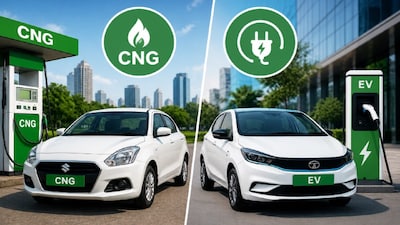
- •According to TERI's study, CNG vehicles may have a lower environmental impact over their entire lifecycle compared to EVs, given India's current power mix.
- •While EVs don't emit smoke directly, a large portion of electricity for charging still comes from coal-fired power plants.
- •Considering the 'well-to-wheel' analysis, CNG currently shows a lower environmental impact from production to use compared to EVs.
- •EV battery production requires materials like lithium, cobalt, and nickel, consuming significant energy for extraction and manufacturing.
- •Disposing of old EV batteries is a major challenge, whereas CNG vehicles do not face battery-related production, recycling, and disposal issues.
Key Questions Answered
According to a study by The Energy and Resources Institute (TERI), CNG vehicles may have a lower environmental impact over their entire lifecycle compared to electric vehicles, given India's current power mix where electricity is largely generated from coal-fired power plants. This "well-to-wheel" analysis shows that overall emissions depend not just on vehicle tailpipes, but on the entire production system of fuel or electricity.
Electric cars require large batteries made from materials like lithium, cobalt, and nickel, which consume a lot of energy and electricity to extract and produce. Additionally, when EV batteries become old, proper recycling and disposal are difficult and critical to prevent environmental damage, a challenge that CNG vehicles avoid since they lack large batteries.
While EVs currently face higher total lifecycle emissions due to India's coal-dependent power grid, their environmental footprint can decrease in the future. If India increases its generation of clean energy sources like solar and wind power, EVs could become the best option from an environmental perspective.