Stories
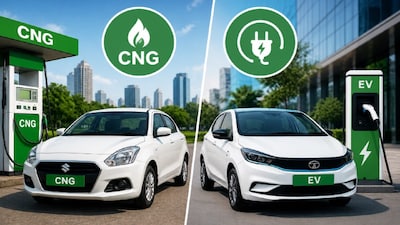
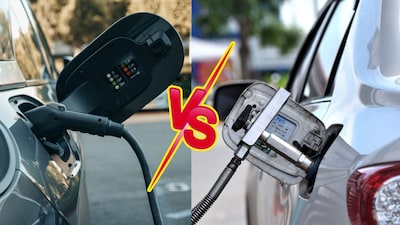
CNG vs EV: Which Car Saves More for Daily 50 KM Drive? The Full Running Cost Math

- •Choosing between CNG and EV is a key decision for car buyers amidst rising fuel prices, with both offering distinct advantages.
- •CNG cars have lower initial costs (₹80,000-₹1 lakh more than petrol) compared to EVs (₹3-₹4 lakh more than petrol).
- •EVs offer significantly lower running costs (₹1.20-₹1.50/km) than CNG (₹3.00-₹3.50/km), potentially offsetting higher upfront costs in 3-4 years for daily 50-70 km drivers.
- •EV maintenance is 30-40% cheaper than CNG due to fewer moving parts and no engine oil or complex gearbox servicing.
- •CNG is ideal for tight budgets and long highway routes without charging worries, while EVs are better for daily city commutes over 40-50 km with home charging access.
Key Questions Answered
CNG variants are typically about ₹80,000 to ₹1 lakh more expensive than standard petrol models. In contrast, electric vehicles require an additional upfront payment of ₹3 to ₹4 lakh, meaning buyers must invest roughly ₹2.5 lakh to ₹3 lakh more for an EV right from the start.
For a car like the Tata Punch, CNG running costs range from about ₹3.00 to ₹3.50 per kilometer based on a mileage of 25-27 km/kg and CNG priced at ₹80 to ₹85 per kg. Meanwhile, charging an EV at home using an AC slow charger brings the running cost down to approximately ₹1.20 to ₹1.50 per kilometer.
A CNG car relies on an internal combustion engine, requiring regular servicing for engine oil, oil filters, spark plugs, coolants, and air filters, alongside mandatory CNG hydro-testing every 3 years. Conversely, an electric car has minimal moving parts with no engine oil, pistons, or gearboxes, making routine EV servicing 30 to 40% cheaper than CNG.