Stories
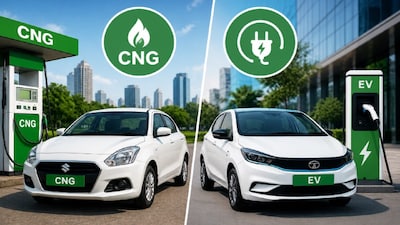
CNG Outperforms EVs in Environmental Impact, TERI Study Reveals
- •A new study by The Energy and Resources Institute (TERI) indicates that Compressed Natural Gas (CNG) currently has a lower overall lifecycle environmental burden than Electric Vehicles (EVs) across most vehicle categories in India.
- •The primary reason for CNG's better environmental performance is India's coal-dependent electricity generation mix, which impacts the lifecycle assessment of EVs.
- •TERI's "Study on Comparative Assessment of Vehicular Fuels in India's Energy Transition" emphasizes assessing environmental performance across the entire lifecycle, including fuel/electricity production, vehicle manufacturing, operation, and end-of-life disposal.
- •While EVs offer advantages in operational air pollution with no tailpipe emissions, their overall lifecycle performance is sensitive to the electricity source and battery manufacturing's environmental footprint.
- •The study suggests electric mobility is preferred for two-wheelers and three-wheelers, while CNG offers a stronger balance for passenger cars, taxis, buses, and light commercial vehicles, highlighting the need for a differentiated approach to India's energy transition.
Key Questions Answered
A study by The Energy and Resources Institute (TERI) found that compressed natural gas (CNG) currently has a lower overall lifecycle environmental burden than electric vehicles (EVs) across most vehicle categories in India, primarily due to the country's coal-dependent electricity generation mix and battery manufacturing footprints.
TERI found that EVs have the lowest ownership costs and are preferred for two-wheelers, three-wheelers, and certain urban mobility applications. However, electrification challenges become more pronounced in larger vehicle categories due to charging infrastructure requirements, payload considerations, battery-related environmental impacts, and dependence on imported critical minerals.
Under the government's PM E-DRIVE scheme, incentives are provided to promote electric vehicle adoption, alongside an allocation of Rs 2,000 crore dedicated to setting up public EV charging stations across the country.