Stories
PM Modi's Swachh Bharat Mission: A 12-Year Triumph in Public Health and Sanitation
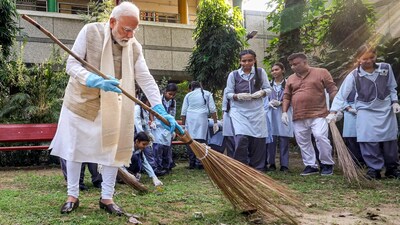
- •Launched on October 2, 2014, the Swachh Bharat Mission aimed to end open defecation by Mahatma Gandhi's 150th birth anniversary, significantly improving rural sanitation from 39% coverage.
- •The mission led to the construction of 12.22 crore rural toilets, transforming public health by averting premature deaths, disease, and lost productivity, with a 2006 estimate valuing inadequate sanitation costs at $53.8 billion.
- •WHO estimated the mission would avert over three lakh deaths from diarrhea and malnutrition between 2014 and October 2019, with rural India declared open defecation free on October 2, 2019.
- •Studies linked the mission to 60,000 to 70,000 fewer infant deaths annually, and UNICEF calculated that ODF status provided rural families an average gain of ’50,000 per year, primarily from recovered working hours and reduced medical bills.
- •The World Bank provided a $1.5 billion loan, tying funds to toilet usage rather than just construction, a fundamental shift that ensured high utilization rates and contributed to India meeting its SDG sanitation target 11 years early.
Key Questions Answered
Researchers from the International Food Policy Research Institute, the University of California, and Ohio State University found that districts raising toilet coverage above 30 percent recorded 5.3 fewer infant deaths and 6.7 fewer deaths of children under five per 1,000 live births, linking the mission to 60,000 to 70,000 fewer infant deaths annually.
Unlike earlier national programs that judged progress solely by the number of latrines built, the World Bank lent $1.5 billion with $1.475 billion distributed as incentive grants to states based on independent surveys measuring whether people actually used the toilets and kept villages open defecation free.
A 2017 UNICEF survey across 12 states found that living in an open defecation free village saved each rural household about ₹50,000 annually. This included roughly ₹8,000 in reduced medical bills, about ₹25,000 in saved time previously lost to sickness or walking to fields, and ₹17,600 from lives saved.