Stories
India Suspends Indus Waters Treaty After Pahalgam Attack, Citing Pakistan's Terrorism Support

- •India announced the suspension of the Indus Waters Treaty (IWT) following the April 22, 2025, Pahalgam terrorist attack, which killed 26 civilians.
- •The decision links the future of water cooperation to Pakistan's credible and irrevocable abjuration of cross-border terrorism.
- •For over six decades, India maintained the IWT, a 1960 World Bank-facilitated agreement, despite Pakistan's continued support for anti-India terror groups.
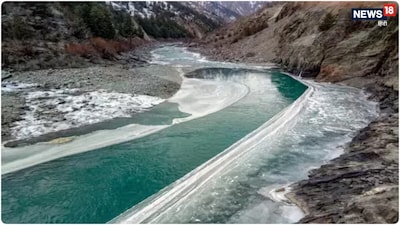
- •The IWT granted India unrestricted use of eastern rivers (Sutlej, Beas, Ravi) and Pakistan extensive control over western rivers (Indus, Jhelum, Chenab), with India retaining limited rights on western rivers.
- •India's move signals a strategic shift, asserting that bilateral relations and water security cannot be unconditional entitlements while its security concerns remain unaddressed.
Key Questions Answered
India placed the Indus Waters Treaty in abeyance following the April 22, 2025, Pahalgam terrorist attack, which resulted in the deaths of 26 civilian tourists. New Delhi announced the suspension to demand that Pakistan credibly and irrevocably abjure its support for cross-border terrorism before the water-sharing pact can be reconsidered.
Signed in 1960 via World Bank mediation, the Indus Waters Treaty divided the six basin rivers into two groups. India received unrestricted use and 100 percent control over the eastern rivers (Sutlej, Beas, and Ravi), while Pakistan was allocated the western rivers (Indus, Jhelum, and Chenab) with roughly 70 to 80 percent of the system's water.
Pakistan initiated arbitration before a Court of Arbitration at the Permanent Court of Arbitration in The Hague over the design of India's Kishenganga and Ratle hydroelectric projects on the western rivers. India has consistently rejected the tribunal's competence and jurisdiction, stating its rulings have no effect on India's sovereign water decisions or the suspension of the treaty.