Stories
Indus Waters Treaty: Why Has India Not Cut Off Pakistan's Water for 17 Months?
- •India suspended the Indus Waters Treaty on April 23, 2025, following a terrorist attack in Pahalgam.
- •India stated the agreement would remain suspended until Pakistan completely and permanently stops cross-border terrorism.
- •The Indus Waters Treaty, signed in 1960, allocated eastern rivers (Ravi, Beas, Sutlej) to India and western rivers (Indus, Jhelum, Chenab) primarily to Pakistan.
- •India can store up to 3.6 MAF of water on western rivers but currently only has a capacity of 1 MAF.
- •Stopping river water requires large dams and infrastructure, which India is still developing, making immediate water cutoff challenging.
Key Questions Answered
India suspended the historic 1960 Indus Waters Treaty following an April 22, 2025, terrorist attack in Pahalgam, Kashmir, where terrorists from Pakistan killed 26 innocent tourists after asking their religion. Foreign Secretary Vikram Misri clarified that the agreement will remain suspended until Pakistan completely and permanently halts cross-border terrorism.
According to river expert Himanshu Thakkar, river water cannot be turned off like a tap without massive dams, reservoirs, and canal infrastructure. India currently has storage capacity for only 1 MAF on the western rivers—far below the 3.6 MAF legal limit allowed by the treaty—and lacks sufficient large dams to store heavy summer flows for the dry winter season.
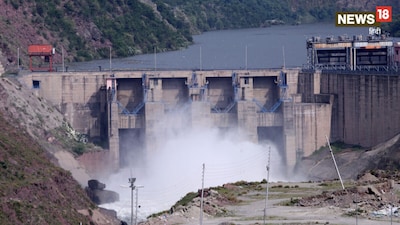
India is accelerating several hydroelectric projects in the Kishtwar district of Jammu and Kashmir, including the 1,000 MW Pakal Dul project, the 624 MW Kiru project, the 540 MW Kwar project, and the 850 MW Ratle project on the Chenab River. While these run-of-the-river projects generate electricity quickly, most have very limited water storage capabilities, with Pakal Dul being the only exception featuring a large reservoir.