Stories
Pakistan PM Warns India: Diverting Indus Waters is 'Act of War' at UN

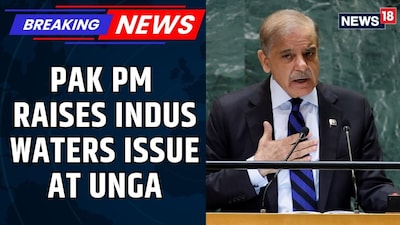
- •Pakistan Prime Minister Shehbaz Sharif warned India at the UN General Assembly that diverting Pakistan's share of Indus waters would be considered an "act of war."
- •Sharif emphasized that the shared waters of the Indus River system are vital for Pakistan and the entire South Asian region.
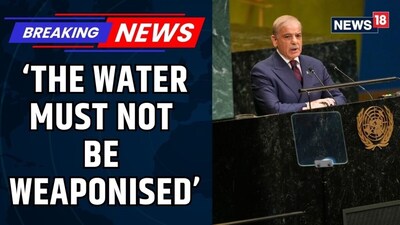
- •He accused India of unilaterally placing the Indus Waters Treaty in abeyance without legal basis, stating, "Water must never be weaponised."
- •Sharif reiterated Pakistan's stance that the 1960 Indus Waters Treaty remains "valid, binding and fully operative," citing international legal and expert opinions.
- •India maintains the treaty was put in abeyance after the April 2025 Pahalgam terror attack, demanding Pakistan end cross-border terrorism.
Key Questions Answered
Pakistan Prime Minister Shehbaz Sharif warned at the United Nations General Assembly that any attempt by India to stop, restrict, or divert Pakistan’s share of the Indus waters would be treated as an act of war. He also criticized India's unilateral decision to hold the 1960 treaty in abeyance, asserting that the pact remains fully valid and supported by international legal opinions.
India maintained that the Indus Waters Treaty was placed in abeyance following the April 2025 terror attack in Pahalgam, which killed 26 people. New Delhi stated that the suspension will remain in effect until Pakistan takes credible and irreversible steps to end cross-border terrorism, arguing that the circumstances surrounding the original agreement have fundamentally changed.
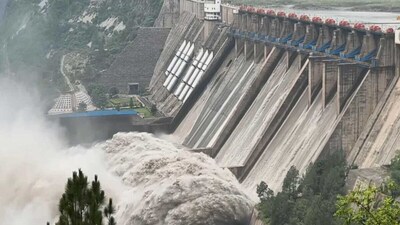
Signed in 1960, the Indus Waters Treaty is a landmark agreement brokered by the World Bank that governs the sharing and management of six rivers and their tributaries between India and Pakistan. It has served as a key framework for managing regional water resources for decades, though it has recently become a major flashpoint following cross-border security tensions.