Stories
India Leads Global Push to Rewire World Order, Championing Multilateralism and Global South
- •India, a founding member of multilateral institutions, advocates for reformed multilateralism and multipolarity, representing the Global South's interests.
- •Existing global institutions like the UN and Bretton Woods have failed to adapt to 21st-century realities, with power shifting to the South and East.
- •India actively participates in diverse international bodies, from BRICS and Quad to G20, promoting strategic autonomy and multi-alignment.
- •India's Dr. S. Jaishankar and PM Narendra Modi emphasize the need for fundamental UN reforms, advocating for a more inclusive and representative global governance.
- •India's G20 presidency ensured the African Union became a permanent member, reinforcing the call for equitable representation in reformed institutions.
Key Questions Answered
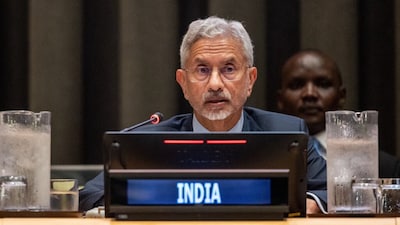
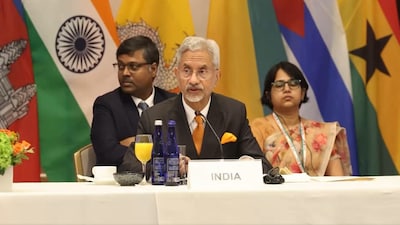
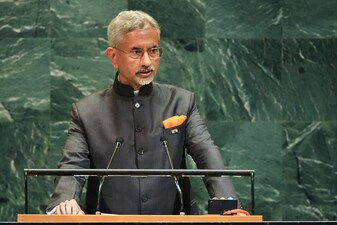
Representing India at the UN General Assembly, Dr S. Jaishankar campaigned for a non-permanent seat for the 2028-29 term and advocated for fundamental reforms of the UN. At the Partners for Multilateralism Summit, he pressed for reformed multilateralism to tackle the '4F' crisis of fuel, food, fertiliser, and finance alongside global geopolitical stress.
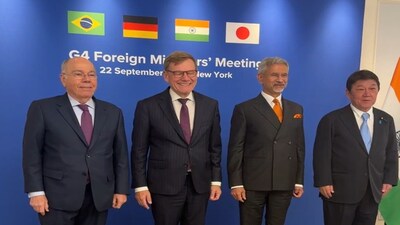
India contends that the UN and its allied bodies reflect an outdated post-WWII victor and vanquished mindset that fails to match 21st-century realities. Prime Minister Narendra Modi and External Affairs Minister S. Jaishankar have strongly urged the international community to move past rhetoric and begin concrete text-based negotiations for comprehensive UNSC expansion and global governance reforms.
Dr S. Jaishankar hosted the historic first-ever India-V4 Foreign Ministers meeting with the Visegrad Group, consisting of Poland, Hungary, Slovakia, and the Czech Republic, to strengthen political, economic, and defence ties. All members of the group expressed support for UN reforms as well as India's legitimate claim to a permanent seat on a reformed UNSC.