Stories
India Rises Amidst Global Instability: A Paradox of Power and Fragile Order

F
Firstpost•28-09-2026, 17:48
India Rises Amidst Global Instability: A Paradox of Power and Fragile Order
- •Global leaders express concern over a fracturing international system, with UN Secretary-General António Guterres noting "cracks have become canyons" and Emmanuel Macron warning of a "return to the law of the jungle."
- •India's economic transformation is significant, with the IMF calling it the world's fastest-growing major economy and a key driver of global growth, attracting substantial investment like Applied Materials' $5 billion semiconductor plan.
- •India's diplomatic influence is growing, evidenced by its G20 presidency facilitating the African Union's admission and its ability to maintain relationships across competitive political groupings like Quad and BRICS.
- •India's strategic autonomy, once seen as non-alignment, now allows it to navigate complex geopolitical landscapes, working with the US while maintaining Russian ties and supporting Palestinian statehood alongside deepening relations with the Gulf and Israel.
- •India faces the challenge of its development coinciding with global fragmentation, rearmament, and protectionism, requiring secure access to energy, technology, and open markets in an increasingly contested world, making UN reform crucial for its future influence.
Key Questions Answered
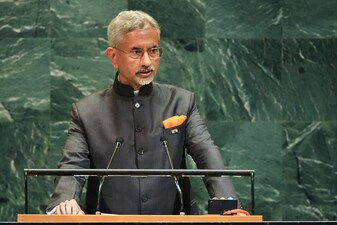
During the UN General Assembly, the foreign ministers of Brazil, Germany, India, and Japan met as the G4 group to advocate for expanding both permanent and non-permanent seats on the Security Council.
Applied Materials announced plans to invest $5 billion in India over the next decade as semiconductor companies seek to diversify production amid geopolitical uncertainty and technological competition.
India's G20 presidency facilitated the admission of the African Union as a permanent member of the G20, directly supporting New Delhi's position that global governance must better represent the Global South.