Stories
A Decade Of Deterrence: How India's Military Response Evolved Under PM Modi
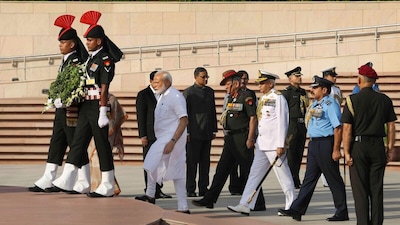
- •Over the past decade, India shifted its military doctrine from diplomatic protests to decisive cross-border operations like Uri, Balakot, and Operation Sindoor.
- •The depth and targets of Indian retaliatory strikes expanded significantly over time, moving from tactical launch pads to terrorist headquarters and eventually Pakistani airbases.
- •Operation Sindoor showcased advanced operational transparency with immediate satellite imagery, joint military briefings, and proactive global diplomatic outreach.
- •Prime Minister Narendra Modi established clear red lines, asserting that India will no longer tolerate nuclear blackmail or separate terrorists from their state sponsors.
Key Questions Answered
Over the decade, India transitioned from strategic restraint to proactive deterrence by significantly expanding the depth, targets, and force utilization of its military actions. While the 2016 Uri response targeted launch pads just across the Line of Control, the 2019 Balakot strikes hit camps across the international boundary, and Operation Sindoor in May 2025 struck deep into Pakistan, targeting headquarters like Bahawalpur and eventually Pakistani airbases following enemy escalation.
Operation Sindoor was triggered by an April 22, 2025 terror attack in the Baisaran meadow above Pahalgam that killed 26 visitors. In response, India launched precision strikes between 1:05 and 1:30 am on May 7 across nine sites in Pakistan and PoK, hitting Jaish's Bahawalpur headquarters and Lashkar's Muridke complex. When Pakistan retaliated with drones and missiles, India struck 11 Pakistani airbases, including Nur Khan and Sargodha, before the DGMOs agreed to halt firing.
Unlike the Balakot operation in 2019, which left New Delhi defending its unverified claims for months without releasing imagery, Operation Sindoor featured real-time transparency. Officials released before-and-after pictures on screen the very same morning, conducted daily joint briefings, used PIB fact-checks to counter Pakistani claims instantly, and deployed seven all-party delegations across 33 countries to secure international backing.