Stories
India's Counter-Terrorism Evolution: From Restraint to Retribution Post-Uri

- •India's response to terror shifted dramatically after the 2016 Uri attack, moving from "strategic restraint" to "suitable retribution."
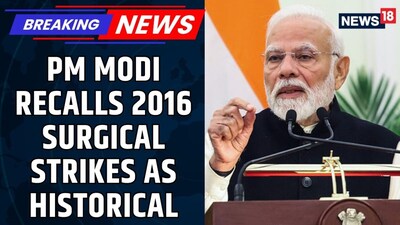
- •The 2016 surgical strikes across the LoC marked a new willingness to accept calculated escalation against cross-border terrorism.
- •Subsequent operations like the 2019 Balakot airstrike and 2025 Operation Sindoor expanded India's response geographically and operationally, targeting terrorist infrastructure deep inside Pakistan.
- •This evolving doctrine aims to raise the cost of proxy warfare for adversaries, making their support for militant groups vulnerable to direct military action.
- •While large-scale urban terror attacks have decreased since 2016, adversaries have adapted tactics, focusing on drone-based methods and small fidayeen groups, indicating an ongoing challenge in asymmetric warfare.
Key Questions Answered
Following the September 18 Uri terror attack that killed 19 Indian Army soldiers, India carried out surgical strikes on the night of September 28-29, 2016. Indian special forces targeted multiple terrorist launch pads across the Line of Control in Pakistan-occupied Kashmir, marking a definitive paradigm shift from strategic restraint to proactive deterrence.
India expanded its response scope with the February 2019 Balakot airstrike against a Jaish-e-Mohammed facility following the Pulwama attack, proving that operations could extend deep into Pakistani territory. Later, Operation Sindoor on May 7, 2025, struck nine terrorist sites in Pakistan and Pakistan-occupied Jammu and Kashmir following the Pahalgam attack.
Operation Sindoor was a targeted military counter-terrorism action carried out by India on May 7, 2025. Launched in response to the April 2025 Pahalgam terror attack, the operation focused on nine terrorist sites located in Pakistan and Pakistan-occupied Jammu and Kashmir without targeting Pakistani military facilities.