Stories
Century-Old Snake DNA Solves Himalayan Mystery and Uncovers New Species
M
Moneycontrol•08-10-2026, 19:11
Century-Old Snake DNA Solves Himalayan Mystery and Uncovers New Species
- •A 170-year-old museum snake specimen collected in 1854 provided vital DNA that helped scientists untangle a major Himalayan taxonomic mystery.
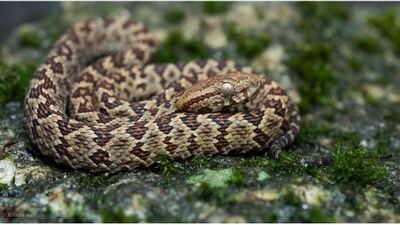
- •A recent study published in ZooKeys revealed that the Himalayan pit viper is not just one species, but consists of five distinct lineages.
- •Researchers described three brand new species from Pakistan and Nepal, highlighting hidden biodiversity in the western Himalaya and Hindu Kush.
- •Advanced DNA extraction techniques allowed scientists to successfully retrieve genetic material from historical museum specimens preserved in formalin.
- •Geographical barriers like the Upper Indus and Karnali river valleys likely isolated the populations and drove the evolution of these distinct species.
Key Questions Answered
The 2026 study published in ZooKeys recovered five well-supported lineages, including the strict sense Gloydius himalayanus, G. chambensis, and three newly described species from Pakistan and Nepal.
Scientists utilized newer technological methods to successfully retrieve DNA from museum snake specimens preserved in formalin, such as a 170-year-old syntype collected in 1854.
Scientists suggested that historical river valleys like the Upper Indus and Karnali acted as geographical barriers, isolating different pit viper clades and shaping their current distribution.