Stories
How to Identify a Real Banarasi Saree? Know These 6 Key Things Before Buying.
N
News18•25-09-2026, 13:44
How to Identify a Real Banarasi Saree? Know These 6 Key Things Before Buying.
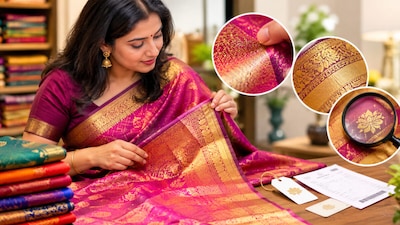
- •Identify real Banarasi sarees by their zari work; intricate thread weaving is visible on the reverse, unlike flat machine-made versions.
- •Handloom Banarasi sarees show a slightly tangled, natural thread pattern on the back, while fake or powerloom sarees have a clean, uniform reverse.
- •Real Banarasi sarees are made from pure silk, feeling soft and luxurious with a heavier weight; synthetic fabrics in fakes lack this quality.
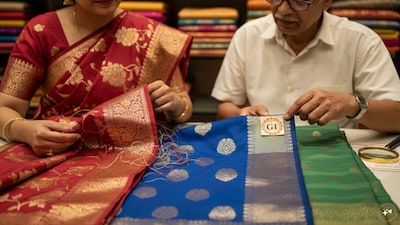
- •Authentic Banarasi sarees often carry a GI (Geographical Indication) tag, certifying their traditional craftsmanship in the Varanasi region.
- •Real Banarasi sarees are more expensive due to the time and effort involved in their creation; a very low price for a heavily zari saree may indicate a fake.
Key Questions Answered
Traditional Banarasi sarees are woven using gold or silver-plated threads. If you turn the saree over and observe fine and intricate thread weaving on the back, it indicates authenticity, whereas machine-made sarees look flat and uniform.
Real Banarasi sarees frequently feature a GI (Geographical Indication) tag or certificate, which formally certifies that the product was crafted in the Varanasi region using traditional methods.
A genuine handloom-made Banarasi saree displays a slightly tangled and natural thread pattern on the reverse side. In contrast, fake or powerloom-manufactured sarees have a backside that appears exceptionally clean and uniform.