Stories
Supreme Court Challenges UPI MDR: Notice Issued to RBI, NPCI Over Charges Above ₹2,000
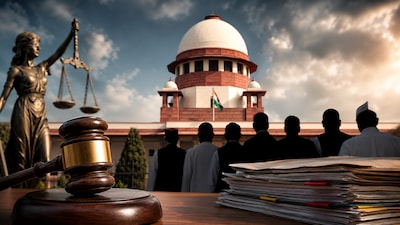
- •The Supreme Court has issued notices to RBI and NPCI regarding a 0.4% Merchant Discount Rate (MDR) on UPI person-to-merchant transactions exceeding ₹2,000.
- •The court did not halt the MDR framework's implementation, which began on October 15, ending nearly six years of free UPI payments for specified transactions.
- •The Solicitor General clarified that MDR is a service charge levied by aggregators and banks, not a government revenue source.
- •The new framework caps MDR at ₹300 for payments of ₹75,000 and above, with essential sectors paying a flat ₹5 for transactions over ₹2,000.
- •The Public Interest Litigation challenges the levy's constitutional validity, alleging lack of transparency, public consultation, and potential adverse effects on merchants and consumers.
Key Questions Answered
The framework introduces a 0.4% Merchant Discount Rate (MDR) on specified person-to-merchant UPI transactions exceeding Rs 2,000, which is capped at Rs 300 for payments of Rs 75,000 and above. Essential sectors like railways and fuel face a flat Rs 5 charge, while mutual funds and capital market transactions attract a 0.02% MDR.
Person-to-person (P2P) transfers and merchant payments up to Rs 2,000 will remain completely free of any MDR charges. P2P transfers alone account for 37% of transaction volume and 70% of transaction value.
The public interest litigation filed by advocate Anjan Datta challenges the levy for lacking adequate statutory safeguards, transparency, and public consultation. It also questions the constitutional validity of amended Section 10A of the Payment and Settlement Systems Act, 2007, and highlights discriminatory treatment compared to RuPay debit cards.