Stories
ZSI Survey Discovers Rich Wild Bee Diversity in Arunachal Pradeshs Tawang

- •A recent Zoological Survey of India study revealed a wide variety of wild bees, including bumblebees, in the high-altitude regions of Tawang, Arunachal Pradesh.
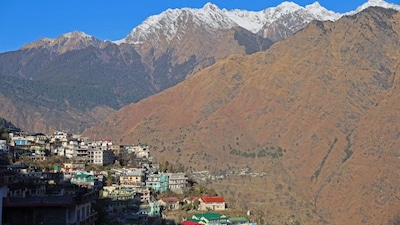
- •The survey was conducted between September 15 and October 7 under the National Mission on Himalayan Studies, covering elevations between 2,000 and 4,700 metres.
- •Researchers recorded bees from four families—Apidae, Megachilidae, Andrenidae, and Halictidae—while noting their heavy reliance on specific alpine flowering plants for nectar and pollen.
- •Scientists emphasized the urgent need to protect alpine flowering habitats, agricultural fields, and natural vegetation from climate change and habitat disruption to safeguard these vital pollinators.
Key Questions Answered
A ZSI study revealed a rich diversity of wild bees, including bumblebees, across high-altitude areas in Arunachal Pradesh's Tawang. The survey recorded bees from four families—Apidae, Megachilidae, Andrenidae, and Halictidae—while exploring locations between 2,000 and 4,700 metres above sea level.
Researchers identified several important floral food sources that support bees with nectar and pollen, including Cirsium species, Rose Carpet Knotweed (Bistorta vacciniifolia), and Cicerbita alpina. Bumblebees were regularly observed visiting these plants during the high-altitude survey.
Scientists stressed that conservation efforts must focus on protecting alpine flowering habitats, kitchen gardens, and agricultural fields that provide vital food sources for pollinators. They warned that climate-related changes in flowering cycles and habitat disturbances could reduce food availability for high-elevation species.