Stories
Ganges Dolphin Detections in Rupnarayan Vary With Tide and Hour
F
Firstpost•13-10-2026, 10:15
Ganges Dolphin Detections in Rupnarayan Vary With Tide and Hour
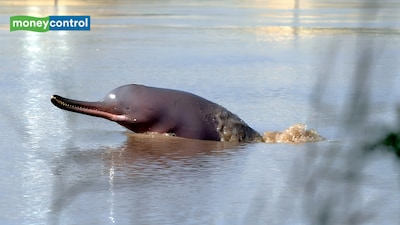
- •A July 2026 paper in Aquatic Mammals reveals that Ganges river dolphin detections in West Bengal’s Rupnarayan river fluctuate based on the hour, tide height, and moon phase.
- •Water height provided the strongest signal in the study, while the lunar pattern remains tentative as it was based on a single lunar cycle.
- •Because counting blind Ganges river dolphins in murky brown water is difficult, researchers relied on an underwater acoustic recorder placed between January 4 and 31, 2024.
- •The endangered species relies heavily on echolocation for navigation, facing major threats such as gill nets, bait fishing, vessel noise, and dolphin oil extraction.
- •India's March 2025 survey estimated 6,327 river dolphins across 28 rivers, with approximately 90 percent of the global population inhabiting India.
Key Questions Answered
A July 2026 paper published in Aquatic Mammals reports that Ganges river dolphin detections vary depending on the hour, the phase of the moon, and the height of the tide, with water height showing the strongest signal.
India's survey released in March 2025 estimated a total of 6,327 river dolphins across 28 rivers in eight different states, with about 90 percent of the world's Ganges river dolphins residing in India.
Threats include bait fishing, monofilament gill nets, and the use of dolphin oil. To help protect them, status reports recommend placing sound-emitting pingers on nets, which have been shown to significantly reduce dolphin detections near the nets during trials.