Stories
US Planned Nuclear Bombs for Canals: Why Project Plowshare Failed
M
Moneycontrol•24-09-2026, 09:47
US Planned Nuclear Bombs for Canals: Why Project Plowshare Failed
- •Project Plowshare, initiated in 1957, explored using nuclear explosives for constructive purposes like digging canals, harbors, and enhancing oil extraction.
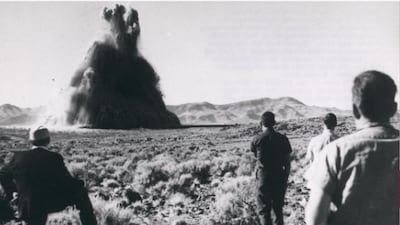
- •The program conducted 27 tests with 35 explosions over 16 years, including the 1962 Sedan test which created a 1,200-foot wide, 320-foot deep crater.
- •A major challenge was radioactive contamination and the distribution of contaminants beyond test sites, raising concerns about fallout and protective measures.
- •Experiments like Gasbuggy in 1967 aimed to enhance natural gas production but faced issues with gas quality and required extensive clean-up.
- •Project Plowshare was abandoned in 1977 due to growing environmental and public opposition, concerns about radioactive safety, economic impracticality, and the 1963 Limited Test Ban Treaty.
Key Questions Answered
Project Plowshare was initiated by the US Atomic Energy Commission in 1957 to determine whether nuclear explosives could be used for constructive purposes like excavating canals, harbors, mountain passes, and enhancing oil and gas extraction.
The largest experiment under the project was the Sedan test, which used a 104-kiloton device detonated on July 6, 1962, in Nevada and left behind a crater 1,200 feet wide and 320 feet deep.
The program was abandoned due to growing environmental and public opposition, radioactive contamination concerns, the limitations imposed by the 1963 Limited Test Ban Treaty, and questions regarding the economic competitiveness of nuclear excavation versus conventional methods.