Stories
Starship Engine Failure Threatens NASA Moon Mission Timelines
- •A Starship engine malfunction during its 14th uncrewed test flight could delay NASA's plans for astronaut missions to the moon, potentially impacting the 2028 target.
- •Starship is one of two vehicles competing to be NASA's primary lunar lander, crucial for the Artemis program's goal of returning humans to the moon.
- •The mission was cut short after a propulsion system malfunction, specifically the unexpected shutdown of one of its three main Raptor engines.
- •The severity of the setback depends on whether the engine issue is an isolated incident or indicates a larger design flaw requiring extensive upgrades.
- •NASA needs Starship for Artemis III, an Earth-orbit test mission targeted for next summer, which is a rehearsal for the first crewed lunar landing.
Key Questions Answered
The unexpected engine shutdown during Starship's 14th test flight may complicate NASA's timeline for landing astronauts on the moon. NASA relies on Starship for the Artemis III mission as early as next summer, so any propulsion fixes that delay upcoming flights will eat into that critical schedule.
NASA officially aims to return astronauts to the moon's surface by 2028 to stay ahead of China's 2030 crewed lunar landing goal. Amid development delays, NASA plans to use whichever lunar lander—SpaceX's Starship or Blue Origin's Blue Moon—is ready to fly first.
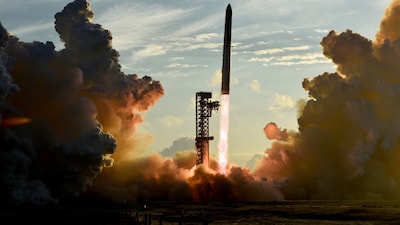
During the 14th test flight from Texas, one of Starship's three main Raptor engines experienced an unexpected shutdown following separation from the lower-stage booster rocket. Despite this propulsion system malfunction, flight controllers proceeded to send the spacecraft into orbit for a commercial satellite deployment.