Stories
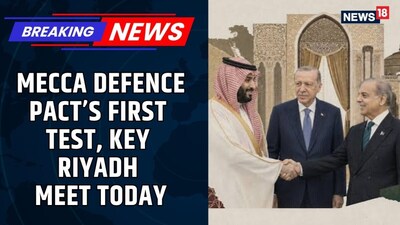
Pakistan Tests Mecca Pact Strategy Amid Houthi Escalation
N
News18•09-10-2026, 16:48
Pakistan Tests Mecca Pact Strategy Amid Houthi Escalation
- •Pakistan faces international scrutiny over its cautious verbal response to Houthi drone and missile strikes targeting Saudi Arabia.
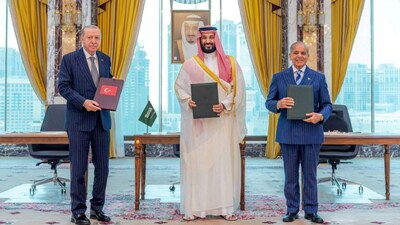
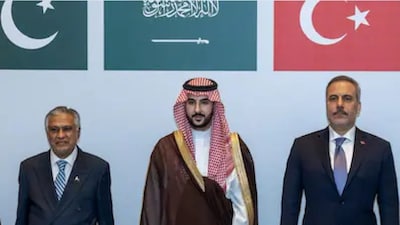
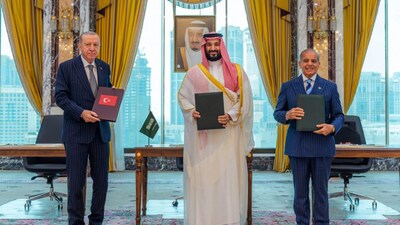
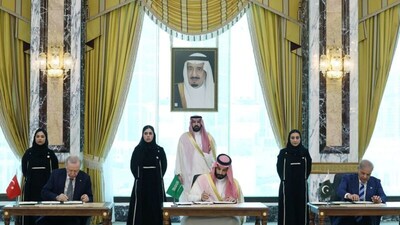
- •Despite the newly formalised Mecca Defence Pact involving Islamabad, Riyadh, and Ankara, Pakistan has relied on diplomatic appeals rather than military deterrence.
- •Critics argue that issuing soft entreaties instead of enforcement warnings highlights a gap between alliance commitments and active security measures.
- •Domestic economic instability and political volatility make Prime Minister Shehbaz Sharif hesitant to entangle forces in West Asian conflicts.
- •The Sharif administration navigates a delicate balance of showing loyalty to Riyadh for financial backing while avoiding broader regional escalation.
Key Questions Answered
The Mecca Defence Pact is a trilateral collective security alliance modelled after NATO, pledging that an armed attack on any member state will be treated as an attack on all and requiring a joint military response.
Pakistan has relied on soft-spoken verbal appeals and calls for maximum restraint rather than hardline enforcement warnings or immediate military deterrence, raising questions about the operational credibility of the Mecca Pact.
Islamabad is constrained by persistent economic instability, domestic political volatility, and active security threats along its western frontier, including TTP attacks and tensions with the Afghan Taliban, making leadership reluctant to enter another conflict.