Stories
Pakistan Recycles Kashmir Rhetoric To UN Chief Amid Economic Collapse And Local Tensions
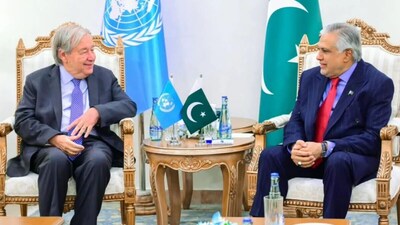
- •Pakistan Foreign Minister Ishaq Dar raised the Kashmir issue with UN Chief António Guterres in Islamabad.
- •Intelligence sources state the Kashmir narrative is a smokescreen to distract from severe domestic governance failures.
- •Pakistan is currently facing severe macroeconomic crises, high inflation, and unsustainable debt levels.
- •Civil unrest has erupted in Pakistan-occupied Jammu and Kashmir led by the Jammu Kashmir Joint Awami Action Committee.
- •The Pakistani state has responded to domestic dissent with aggressive crackdowns, paramilitary deployments, and communication blackouts.
Key Questions Answered
Pakistan's Foreign Minister Ishaq Dar used the meeting with UN Chief António Guterres to brief him on the Jammu and Kashmir issue, reiterating Islamabad's demand for a peaceful resolution according to UN Security Council resolutions. However, intelligence sources note this rhetoric acts as a political smokescreen to divert international attention from domestic governance failures.
Pakistan is facing severe macroeconomic distress driven by astronomical inflation, high debt, and strict IMF-mandated austerity measures, which include a 33% surge in electricity tariffs and a 39% hike in domestic fuel prices. These pressures have pushed the power-sector circular debt past PKR 1,675 billion while the IMF projects the current account deficit to widen up to $4 billion.
The Jammu Kashmir Joint Awami Action Committee (JAAC) spearheaded regional protests initially sparked by the denial of basic wheat and electricity subsidies in Pakistan-occupied Jammu and Kashmir (PoJK). The movement has since expanded into a wider political agitation demanding greater regional autonomy, resource control, local representation, and the establishment of direct economic links with India.