Stories
NASA Satellite Captures Stunning Image of Ancient Spider Crater in Australia
C
CNBC TV18•19-10-2026, 09:58
NASA Satellite Captures Stunning Image of Ancient Spider Crater in Australia
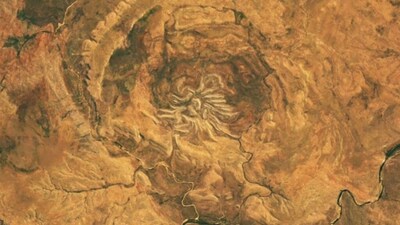
- •NASA's Landsat 9 satellite captured a unique geological formation in Western Australia known as Spider Crater on September 20, 2026.
- •The impact structure measures approximately 13 km long and 11 km wide, with a spider-like centre spanning about 4 km across.
- •Geologists confirmed the site was formed by an ancient meteorite impact rather than volcanic activity, evidenced by fan-shaped fractures.
- •The spider leg patterns consist of durable sandstone ridges that remained as surrounding rock layers eroded over hundreds of millions of years.
- •While the exact age remains unknown, regional rock analysis estimates the meteorite impact occurred between 900 million and 600 million years ago.
Key Questions Answered
Spider Crater is an ancient impact structure in the Kimberley region of Western Australia that resembles a giant spider from above. It was formed hundreds of millions of years ago when a meteorite struck the Earth, causing the ground to bounce back into a raised central section.
The spider-like legs are actually durable sandstone ridges that remained intact while the surrounding layers of rock slowly eroded away over millions of years.
While the exact age of Spider Crater remains unknown, regional rock estimates suggest the meteorite impact occurred between 900 million and 600 million years ago. NASA's Landsat 9 satellite captured a detailed image of the crater on September 20, 2026.