Stories
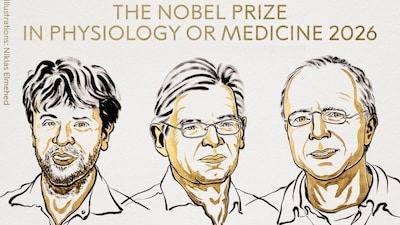
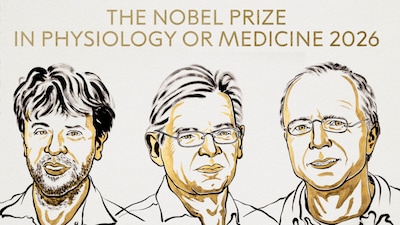
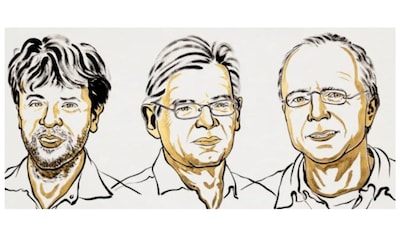
Karl Deisseroth, Peter Hegemann and Georg Nagel Win 2026 Nobel Prize in Medicine

- •The 2026 Nobel Prize in Physiology or Medicine was jointly awarded to Karl Deisseroth, Peter Hegemann and Georg Nagel for discovering light-gated ion channels and developing optogenetics.
- •Optogenetics enables researchers to control individual nerve cells in living brains using light, revolutionizing the study of neurological functions.
- •Peter Hegemann and Georg Nagel discovered channelrhodopsin, a light-responsive protein, while Karl Deisseroth successfully applied it to control nerve signals in living mice.
- •The groundbreaking technique has provided critical insights into brain processes related to memory, emotions, and movement, and aids research into disorders like Parkinson’s disease and depression.
Key Questions Answered
The 2026 Nobel Prize in Physiology or Medicine was jointly awarded to Karl Deisseroth, Peter Hegemann, and Georg Nagel for discovering light-gated ion channels and developing optogenetics.
Optogenetics is a technique that lets researchers control individual nerve cells in a living brain using light. Peter Hegemann and Nagel discovered channelrhodopsin, a light-responsive protein, and Deisseroth later used its gene in rat and mouse nerve cells to trigger signals with blue light.
The technique allows scientists to study how specific nerve cells influence memory, fear, movement, and mood, helping research into conditions like Parkinson’s disease, depression, and addiction. Early clinical work is also exploring its potential to help restore partial vision.