Stories
How Nobel-winning optogenetics research is transforming the treatment of neurological disorders

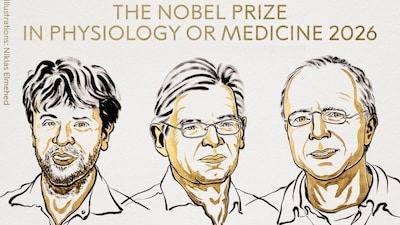
- •Karl Deisseroth, Peter Hegemann and Georg Nagel won the 2026 Nobel Prize in Physiology or Medicine for discoveries concerning light-gated ion channels and optogenetics.
- •Optogenetics is a groundbreaking technique that allows scientists to control specific nerve cells using light, turning their activity on or off like a light switch.
- •The discovery originated from studying light-sensitive proteins called channelrhodopsin in simple green algae.
- •The technology enables researchers to study brain functions with unprecedented precision and aids in researching conditions like Parkinson's disease, depression, addiction and anxiety.
- •Early clinical applications are also exploring the use of optogenetics to restore partial vision in individuals who have lost their sight.
Key Questions Answered
The 2026 Nobel Prize in Physiology or Medicine was awarded jointly to Karl Deisseroth, Peter Hegemann, and Georg Nagel for their discoveries concerning light-gated ion channels and optogenetics.
Optogenetics is a technique that allows scientists to control nerve cells using light. By introducing light-sensitive proteins like channelrhodopsin into specific nerve cells, researchers can use light to switch their activity on or off and observe how it affects functions like movement and memory.
Optogenetics allows researchers to investigate brain connections more directly, aiding research into conditions like Parkinson's disease, depression, addiction, and anxiety, and guiding the search for new treatments. Early clinical work has also explored using optogenetic approaches to restore partial vision in individuals who lost their sight.