Stories
Jaishankar: Diplomacy Now an Extreme Sport as Nations Weaponize Economic Ties
- •External Affairs Minister S Jaishankar warns that countries are increasingly using trade, supply chains, and critical resources as tools of pressure, complicating diplomacy.
- •Jaishankar stated that while interdependence is a reality, competition drives the sentiment, creating incentives to use economic dependence as leverage.
- •He highlighted shipping routes, sanctions, travel restrictions, and market access as potential pressure points, noting that disruptions in one region can have global impacts.
- •Jaishankar questioned the adaptability of international institutions, like the UN, to changes in the global economy, advocating for reforms and a stronger voice for developing countries.
- •Despite challenges, Jaishankar expressed optimism, believing governments still prioritize stable and reliable international arrangements.
Key Questions Answered
External Affairs Minister S Jaishankar warned that nations are increasingly using trade, supply chains, and critical resource access as pressure tools, making diplomacy an "extreme sport". He noted that while interdependence is a reality, competition is the dominant sentiment, creating incentives to weaponize dependencies during rivalries.
Jaishankar pointed to shipping routes, sanctions, travel restrictions, and market access as key pressure points. He also noted that disruptions in energy-producing regions can drive up prices elsewhere, while military technology advances might encourage countries to take greater risks.
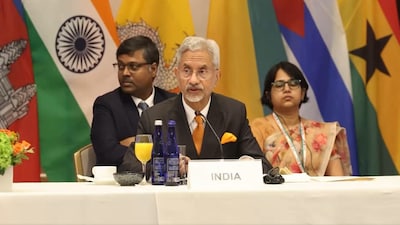
At the Asia Society event in New York, Jaishankar questioned whether international institutions built around earlier distributions of power can adequately adapt to modern global economic shifts. Noting that the UN grew from 51 members in 1945 to 193 members today, he reiterated India's call for UN Security Council reform to provide developing nations a greater voice.