Stories
India's UN Security Council Bid: Roadblocks, Global Support, and Reform Demands
- •India consistently prioritizes a permanent UN Security Council seat, arguing the current composition doesn't reflect contemporary geopolitical realities or the growing role of developing countries.
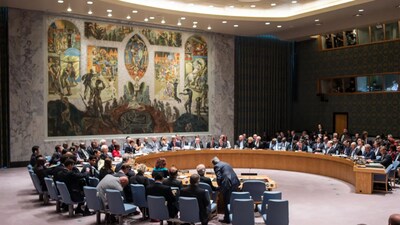
- •The Security Council has 15 members (5 permanent with veto power, 10 non-permanent); India has served eight times as an elected member.
- •India's bid is supported by France, UK, US, and Russia, but differences remain among P5 members on the final reform model, including veto rights and overall composition.
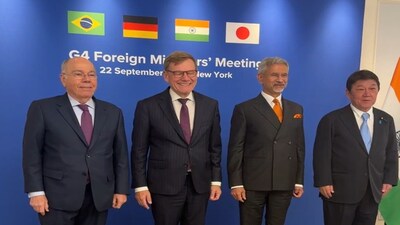
- •India is part of the G4 (with Brazil, Germany, Japan), advocating for an expanded Council with 25-26 members, including new permanent seats for various regions.
- •The African Union demands at least two permanent seats and five non-permanent seats, insisting on selection by the region itself and the extension of veto power to all permanent members, a stance India supports.
Key Questions Answered
India's permanent membership campaign has received backing from major countries including France, the United Kingdom, the United States, and Russia, as well as support through the G4 grouping alongside Brazil, Germany, and Japan. Additionally, countries like Luxembourg have voiced strong support for India's inclusion in an expanded Security Council.
The G4 grouping, consisting of India, Brazil, Germany, and Japan, advocates for expanding the Security Council from 15 to 25 or 26 members. Their proposed model introduces six new permanent members—two from Africa, two from the Asia-Pacific region, one from Latin America and the Caribbean, and one from Western Europe and Others—alongside four or five additional non-permanent seats.
The African Union seeks at least two permanent seats and five additional non-permanent seats, emphasizing that Africa is currently the only major region without representation in the permanent category. They insist that African representatives be selected by the region itself and firmly reject any proposal that excludes permanent seats for Africa or replaces them with renewable arrangements.