Stories
Hurricane Hunters Fly into Polo's Eye: Heart-Pounding Images Reveal 'Stadium Effect' Mystery!
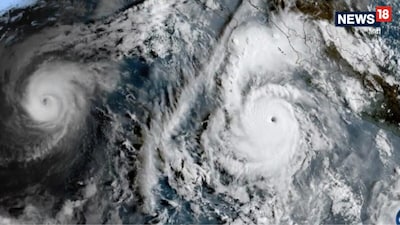
- •NOAA's 'Hurricane Hunters' flew a WP-3D Orion aircraft directly into the 'eye' of Hurricane Polo.
- •The plane entered the storm's center amidst 260 km/h winds, revealing sudden calm and blue sky, known as the 'stadium effect'.
- •The specialized aircraft, affectionately named 'Miss Piggy', collects direct data on wind speed, pressure, temperature, and humidity inside the storm.
- •Special 'dropsondes' are deployed from the plane, measuring wind turns and pressure to send precise data for estimating the storm's destructive potential.
- •Hurricane Polo reached 'Category 5' with winds up to 260 km/h; this mission is crucial for saving millions of lives.
Key Questions Answered
When the NOAA WP-3D Orion aircraft pierces through the dense white cloud wall known as the eyewall, it experiences severe jolts. However, once it enters the center or eye of the storm, the scene completely changes to complete calm with a clear blue sky above and a huge circular cloud wall surrounding it, creating a meteorological phenomenon known as the stadium effect.
The Hurricane Hunters utilize a special Lockheed WP-3D Orion aircraft equipped with dropsondes technology. These small sensors are dropped by parachute into the storm to measure wind speed, air pressure, temperature, and humidity, sending direct data back to the plane's system to estimate the storm's destructiveness.
Hurricane Polo is hovering near the southwestern coast of Mexico, located approximately 315 kilometers southwest of Manzanillo while moving westward. Although its center remains offshore, its effects have brought torrential rains to southwestern Mexico, creating serious risks of landslides and flash floods in hilly areas.