Stories
Doomsday Glacier Melting Rapidly: Scientists Warn Of Catastrophic Sea Level Rise
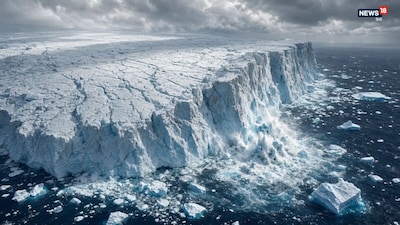
- •The Thwaites Glacier in Antarctica, comparable in size to Tamil Nadu or Chhattisgarh, is melting much faster than previously estimated.
- •Scientists from the University of California and NASA warn that its complete collapse could raise global sea levels by more than two feet.
- •The glacier acts as a crucial barrier holding back Antarctica's massive ice sheet, and its weakening threatens coastal cities worldwide from Miami to Manila.
- •New research reveals that changes at the contact point between the ocean and land beneath the glacier are rapidly destroying its stability.
- •Experts emphasize the urgent need to reduce greenhouse gas emissions to limit the severity of climate change devastation in coming decades.
Key Questions Answered
The Thwaites Glacier is nicknamed the Doomsday Glacier because its size is as massive as Indian states like Tamil Nadu and Chhattisgarh. Its complete collapse could raise global sea levels by more than two feet, and further melting could potentially increase sea levels by about 10 feet.
Scientists from the University of California and NASA's Jet Propulsion Laboratory created a new model to understand the ice sheet. Their research revealed that changes at the contact point between the ocean and the land beneath the glacier are rapidly affecting its stability.
The melting of the glacier will increase the risk of flooding, land erosion, and inundation during storm surges in coastal areas. Many coastal cities worldwide, ranging from Miami to Manila, could face severe threats, as even a slight rise in sea levels makes storm surges much more destructive.