Stories
Chemistry Behind the 2026 Nobel Prize: How Mirror-Image Molecules Impact Medicine
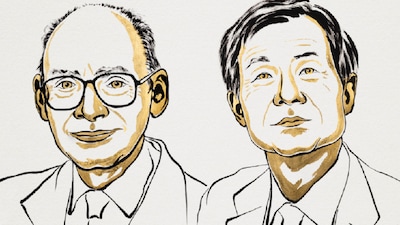
- •The 2026 Nobel Prize in Chemistry was awarded to French chemist Henri B. Kagan and Japanese chemist Kenso Soai for their work on asymmetric organic synthesis.
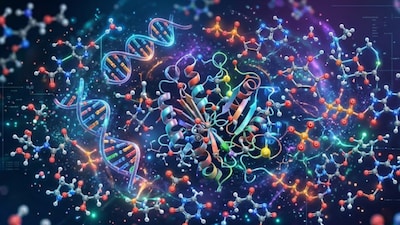
- •Molecules can exhibit chirality, existing in two non-superimposable mirror-image forms known as enantiomers that interact differently with biological systems.
- •Controlling molecular handedness is crucial in pharmaceuticals because one enantiomer may heal while its mirror image can be inactive or harmful.
- •Standard chemical reactions typically produce an equal mixture of both mirror-image forms, posing a significant challenge for drug manufacturing.
- •Henri Kagan pioneered methods to favor one enantiomer, while Kenso Soai discovered asymmetric autocatalysis, showing how tiny molecular imbalances can be amplified.
Key Questions Answered
The 2026 Nobel Prize in Chemistry was awarded to French chemist Henri B. Kagan and Japanese chemist Kenso Soai for their discovery of nonlinear effects and autocatalysis in asymmetric organic synthesis.
Chirality refers to molecules that exist in two non-superimposable mirror-image forms called enantiomers. This matters in pharmaceuticals because one mirror-image form may provide a therapeutic effect while the other can be inactive or cause unwanted side effects.
In 1986, Henri Kagan developed a method to produce a large excess of one mirror-image molecular form. Later, Kenso Soai discovered asymmetric autocatalysis, showing through the Soai reaction how a tiny initial imbalance between enantiomers could be amplified into predominantly one form.