Stories
Chemistry Nobel Prize 2026 Awarded for Solving 100-Year-Old Mystery of Life
M
Moneycontrol•07-10-2026, 16:02
Chemistry Nobel Prize 2026 Awarded for Solving 100-Year-Old Mystery of Life
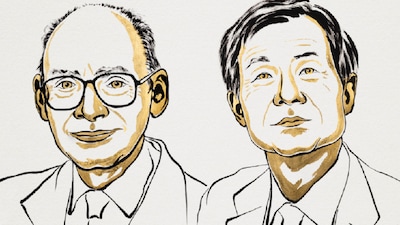
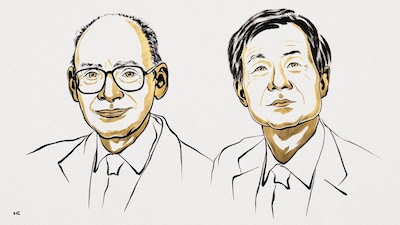
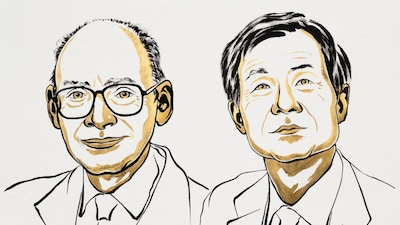
- •The 2026 Nobel Prize in Chemistry has been awarded to Henri B. Kagan and Kenso Soai for their groundbreaking work on molecular handedness.
- •They discovered how tiny molecular imbalances can be dramatically amplified during chemical reactions through non-linear effects and asymmetric autocatalysis.
- •Henri Kagan demonstrated that chiral catalysts can produce a non-linear amplification where a small initial difference yields a much larger final asymmetry.
- •Kenso Soai discovered asymmetric autocatalysis, showing how a tiny initial imbalance can be greatly magnified to produce a single molecular form.
- •Their discoveries help explain why life's essential molecules overwhelmingly exist in just one mirror-image form and offer vital applications in drug development.
Key Questions Answered
The 2026 Nobel Prize in Chemistry was awarded to Henri B. Kagan and Kenso Soai for their groundbreaking research on how tiny molecular imbalances can be dramatically amplified during chemical reactions.
Molecular handedness describes molecules that can exist in two mirror-image forms, much like human left and right hands. These forms are called enantiomers, and they can interact differently with biological systems.
Kenso Soai discovered asymmetric autocatalysis, a reaction where a chemical product helps catalyze more molecules with the same handedness. Through this process, a tiny initial imbalance becomes greatly amplified into an overwhelming majority of one form.